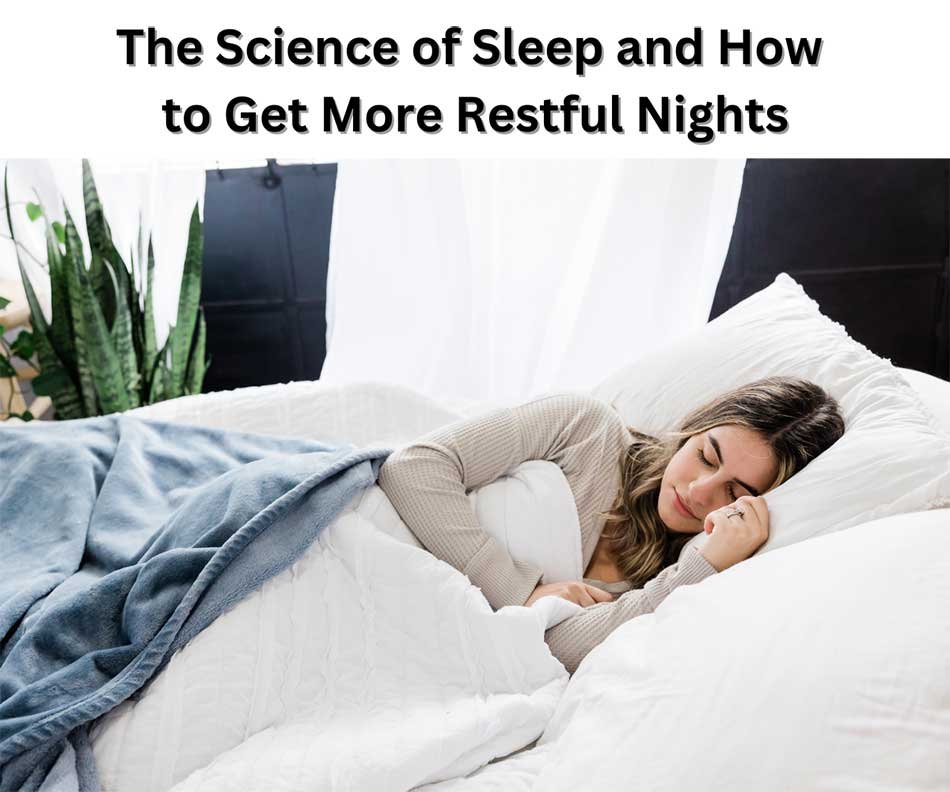
The Science of Sleep and How to Get More Restful Nights
Sleep is a fundamental pillar of health and well-being, yet many people struggle to achieve truly restful nights. The science of sleep reveals how critical it is for physical recovery, mental clarity, and emotional balance. Understanding how sleep works and adopting evidence-based strategies can help you maximize its benefits. This guide dives into the science behind sleep and offers actionable tips for achieving more restful nights.

Understanding the Sleep Cycle
Your sleep is divided into cycles, each consisting of multiple stages:
- Non-Rapid Eye Movement (NREM) Sleep:
- Stage 1: Light sleep where you transition from wakefulness.
- Stage 2: Slightly deeper sleep with a drop in body temperature and relaxed muscles.
- Stage 3: Deep sleep crucial for physical recovery and immune function.
- Rapid Eye Movement (REM) Sleep:
- The stage where dreaming occurs, vital for memory consolidation and emotional processing.
Each cycle lasts about 90 minutes, and you typically go through 4-6 cycles per night.
Why Sleep Is Essential
- Physical Restoration:
- During deep sleep, the body repairs tissues, builds muscle, and strengthens the immune system.
- Cognitive Function:
- Sleep enhances memory, focus, and problem-solving skills.
- Emotional Regulation:
- REM sleep helps process emotions and reduce stress.
- Long-Term Health:
- Consistent quality sleep reduces the risk of chronic conditions like heart disease, diabetes, and obesity.
Factors That Affect Sleep Quality
- Circadian Rhythm:
- Your internal body clock regulates the sleep-wake cycle. Disruptions, such as shift work or jet lag, can impair sleep.
- Sleep Environment:
- Noise, light, and temperature significantly impact sleep quality.
- Diet and Lifestyle:
- Caffeine, alcohol, and late meals can interfere with the sleep cycle.
- Stress and Mental Health:
- Anxiety and stress can make it harder to fall asleep and stay asleep.
Tips for More Restful Nights
1. Follow a Consistent Sleep Schedule
- Go to bed and wake up at the same time every day, even on weekends.
- This reinforces your circadian rhythm and improves sleep quality.
2. Optimize Your Sleep Environment
- Darkness: Use blackout curtains or a sleep mask to block light.
- Quiet: Use white noise machines or earplugs to minimize disturbances.
- Comfort: Invest in a quality mattress and pillows suited to your sleep style.
- Cool Temperature: Keep your room between 60-67°F for optimal sleep.
3. Adopt a Relaxing Pre-Sleep Routine
- How to Practice:
- Engage in calming activities like reading, meditating, or gentle yoga.
- Avoid screens for at least one hour before bed to reduce blue light exposure.
- Consider a warm bath to help lower your body temperature and signal it’s time for sleep.
4. Mind Your Diet
- Avoid caffeine and heavy meals in the evening.
- Opt for sleep-promoting snacks like bananas, almonds, or herbal teas such as chamomile.
5. Manage Stress and Anxiety
- Practice mindfulness techniques like deep breathing or progressive muscle relaxation.
- Keep a journal by your bedside to jot down worries or to-do lists before sleeping.
6. Limit Naps
- If you need a nap, limit it to 20-30 minutes and avoid napping late in the day to prevent interfering with nighttime sleep.
Tools to Improve Sleep
- Apps: Calm, Headspace, and Sleep Cycle for tracking and improving sleep patterns.
- Wearables: Devices like Fitbit or Oura Ring to monitor sleep stages and duration.
- Books: “Why We Sleep” by Matthew Walker provides an in-depth understanding of sleep science.
- White Noise Machines: Useful for masking disruptive sounds.
Common Sleep Disorders and When to Seek Help
- Insomnia:
- Difficulty falling or staying asleep. Seek professional help if it persists for weeks.
- Sleep Apnea:
- Breathing interruptions during sleep. Requires medical diagnosis and treatment.
- Restless Legs Syndrome (RLS):
- Uncomfortable sensations in the legs that disrupt sleep. Consult a healthcare provider for management.
Encourage Others
Share this guide with friends or family to help them improve their sleep quality. Better sleep benefits not only individuals but also the people around them.
Picture This
Imagine drifting off to sleep effortlessly, your mind calm and your body relaxed. You wake up feeling refreshed, energized, and ready to take on the day. Picture yourself thriving with a routine that ensures restful nights and productive days.
What’s one change you can make tonight to start getting more restful sleep?