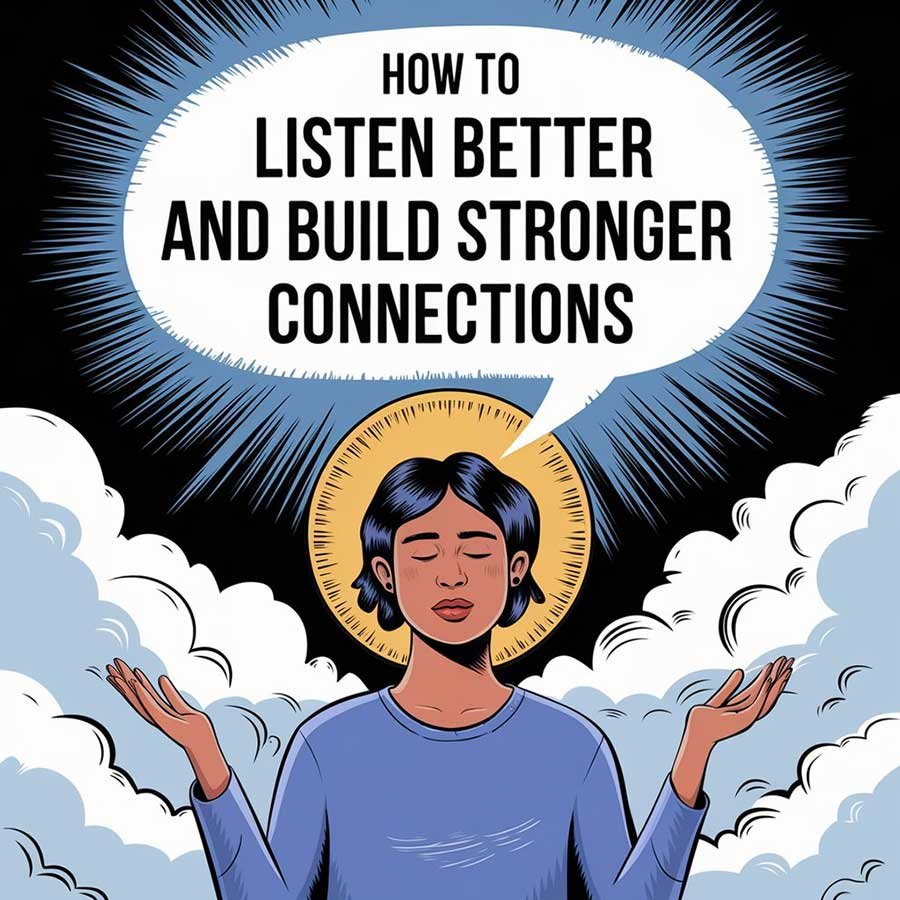
How to Listen Better and Build Stronger Connections
The Art of Listening: Why It Matters
Listening is one of the most powerful tools for building deeper, more meaningful relationships. Yet, in a world filled with distractions, true listening has become a rare skill. Many people hear, but few actually listen. When we practice active listening, we not only improve our relationships but also create a deeper sense of trust, understanding, and connection with those around us.

Whether in personal relationships, professional settings, or casual conversations, becoming a better listener can transform how you connect with others. So, how can you enhance your listening skills and strengthen your relationships?
The Difference Between Hearing and Listening
Many people mistake hearing for listening. Hearing is simply perceiving sound; listening is actively engaging with and processing what is being said. Good listeners are present, engaged, and empathetic, making the speaker feel valued and understood.
How to Become a Better Listener
1. Be Present and Eliminate Distractions
It’s easy to get distracted by phones, notifications, or even our own thoughts during a conversation. To truly listen, put away distractions, maintain eye contact, and focus entirely on the speaker.
How to practice being present:
- Put your phone on silent or out of sight.
- Make eye contact and use positive body language.
- Avoid multitasking while in a conversation.
2. Practice Active Listening
Active listening means fully concentrating, understanding, and responding thoughtfully rather than thinking about what you’ll say next.
How to practice active listening:
- Nod or give verbal acknowledgments like “I see” or “That makes sense.”
- Paraphrase what was said to ensure understanding (e.g., “So what you’re saying is…”).
- Ask open-ended questions to encourage further discussion.
3. Listen Without Interrupting
Interrupting not only disrupts the speaker’s flow but also signals that you value your own thoughts over theirs. Instead of waiting for a pause to interject, focus on fully absorbing what is being said before responding.
How to avoid interrupting:
- Take a breath before responding to ensure the speaker has finished their thought.
- Remind yourself that listening doesn’t mean agreeing—it means understanding.
- Use pauses to reflect on what’s being said before jumping in.
4. Show Empathy and Understanding
Empathy is the ability to understand and share someone else’s feelings. A great listener doesn’t just absorb words but also acknowledges emotions.
How to show empathy:
- Validate the speaker’s feelings by saying, “That sounds really tough” or “I can see why you feel that way.”
- Mirror their emotions through tone and expression.
- Resist the urge to offer solutions immediately—sometimes people just want to be heard.
5. Ask Thoughtful Questions
Asking questions shows that you are engaged and interested in the conversation. Open-ended questions encourage deeper discussions and help the speaker feel heard.
Examples of thoughtful questions:
- “Can you tell me more about that?”
- “How did that make you feel?”
- “What do you think you’ll do next?”
6. Be Mindful of Nonverbal Cues
Communication isn’t just about words—body language, facial expressions, and tone of voice all play a role. Being mindful of these cues helps you better understand the speaker’s emotions.
How to improve nonverbal listening:
- Maintain an open posture (avoid crossing arms or looking away).
- Use facial expressions to show understanding and engagement.
- Match your tone to the situation to create a comfortable space.
7. Resist the Urge to Problem-Solve Immediately
Many people listen with the intent to fix rather than understand. While offering advice is sometimes helpful, most people just want to feel heard.
How to avoid problem-solving too quickly:
- Ask, “Would you like advice or just someone to listen?”
- Focus on their emotions rather than jumping to solutions.
- Let them share their full perspective before suggesting next steps.
8. Follow Up and Show You Remember
A great way to strengthen connections is to follow up on past conversations. Showing that you remember what someone said demonstrates that you value their words and care about their experiences.
Ways to follow up:
- Ask how things have progressed since your last conversation.
- Reference past discussions in future interactions.
- Send a quick message or note to show you’re thinking about them.
Picture This…
Imagine having conversations where people feel truly heard, understood, and valued. Imagine the trust and connection that would naturally develop when you genuinely engage with others. Instead of surface-level interactions, your relationships grow deeper because people know they can rely on you to listen without judgment.
Now, picture the opposite—a world where conversations feel rushed, distractions dominate, and people feel unheard. Which reality do you want to live in?
Becoming a better listener isn’t just a skill—it’s a gift you give to others and yourself. By practicing active listening, eliminating distractions, and responding with empathy, you’ll not only strengthen your relationships but also create deeper and more meaningful connections in every area of life.
Please Share This Article
If this article resonated with you, consider sharing it with your friends, family, or anyone who could benefit from better listening skills. Let’s build stronger connections together!